
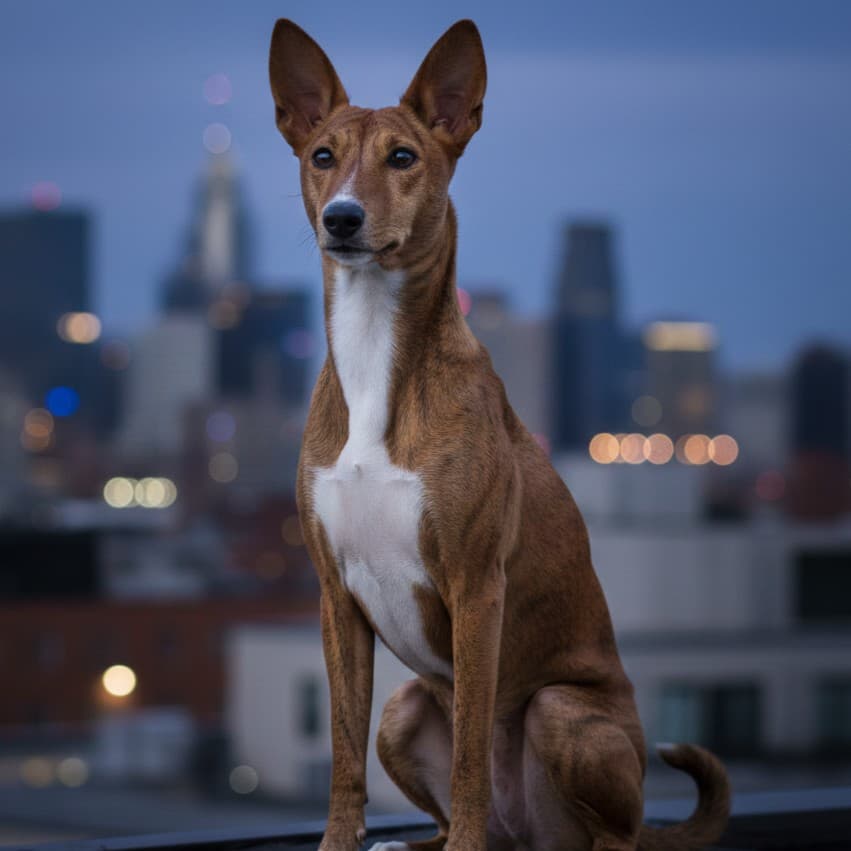
Basenji
The Basenji, known as Africa's 'Barkless Dog,' is one of the oldest and most unique dog breeds in the world. Originally from the Congo, these compact, elegant hunters are known for their intelligence, independence, and distinctive yodeling vocalization instead of barking. They are often described as catlike in their behavior and grooming habits.
Key Stats
Weight
22-24 lbs
Height
16-17"
Lifespan
13-14 yrs
Energy
4/5
Is This Breed Right For You?
Origin & History
The Basenji is an ancient breed depicted in Egyptian artifacts dating back thousands of years. They were developed in Central Africa as hunting dogs, working with pygmy tribes to drive game into nets. The breed was first brought to England in the 1930s and recognized by the AKC in 1943. They remain relatively rare but have devoted enthusiasts worldwide.
Traits & Characteristics
Individual dogs may vary from breed-typical traits
Family & Social
Personality
Physical Traits
Adaptability
Health & Wellness
Key health information for Basenji owners
Health Screening
- Hip & Elbow Evaluation
- Cardiac Exam
- Eye Certification
Exercise Needs
- 60+ minutes daily
- Mental stimulation important
- High energy breed
Watch For
- Progressive Retinal Atrophy (PRA)
- Hypothyroidism
- Hip Dysplasia
- Fanconi Syndrome
Care Guide
Everything you need to know about caring for a Basenji
Grooming
weekly
Exercise
60+ min/day
Training
Moderate
Health
Generally Good
Training Your Basenji
Training Approach
Use positive reinforcement with high-value rewards. Keep training sessions short and varied. Make training feel like a game rather than work. Be patient and consistent.
Training Tips
- Start training early before habits form
- Use their curiosity to make training interesting
- Never use harsh corrections - they become stubborn
- Secure training areas - they are escape artists
- Reward-based training works best
Common Challenges
- Highly independent and can be stubborn
- May ignore commands they find boring
- Strong prey drive makes recall difficult
- Can be manipulative - they're too smart for their own good
Is a Basenji Right For You?
Great Match If...
- You're active and outdoorsy
- You want a loyal companion
Think Twice If...
- You want a low-energy dog
- You're away from home often
Frequently Asked Questions
Basenjis do not bark in the traditional sense, earning them the nickname 'barkless dog.' However, they are not silent. They produce a unique vocalization called a 'yodel' or 'baroo,' and they can also whine, growl, and scream. The inability to bark is due to the unusual shape of their larynx. They are generally quieter than most breeds but will vocalize to express themselves.