
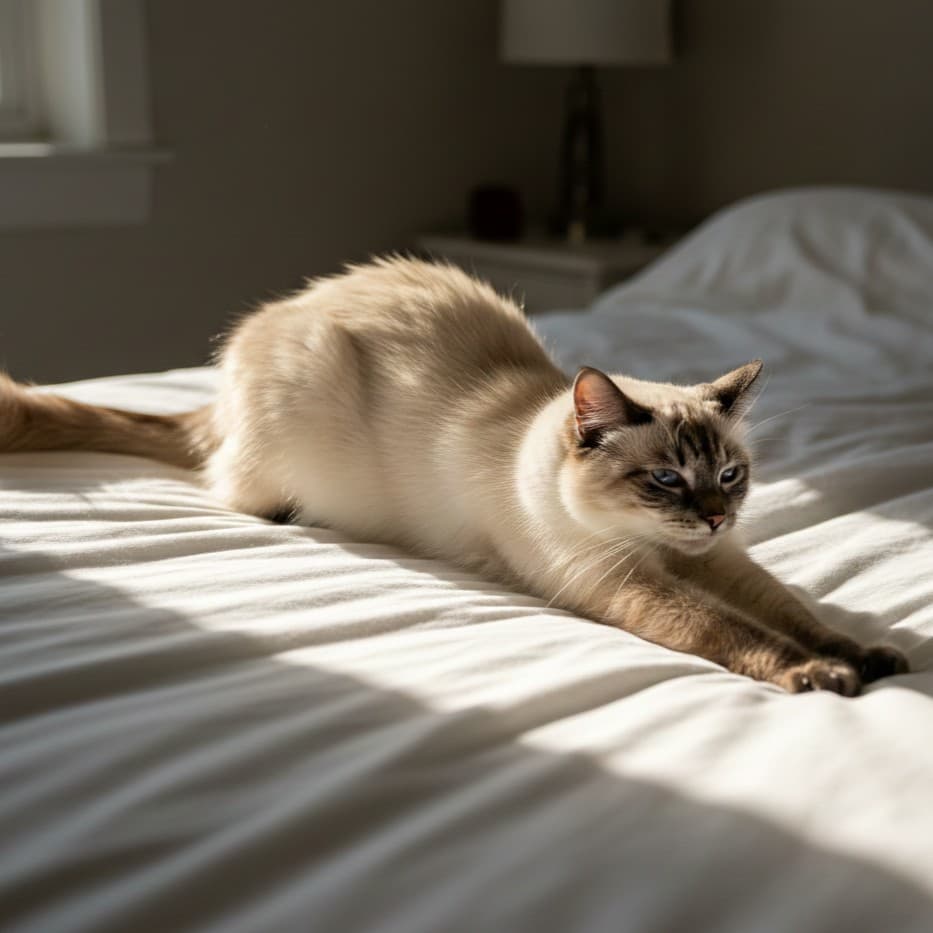
Balinese
The Balinese is a longhaired version of the Siamese, sharing the same elegant lines, vivid blue eyes, and pointed coloration but distinguished by a silky, flowing coat that gives them an air of refined grace. Named for the graceful Balinese dancers they supposedly resemble, these cats combine the striking appearance and keen intelligence of the Siamese with a softer, more luxurious coat. They are social, vocal, and deeply bonded to their families, demanding attention and interaction throughout the day. Balinese are known for their exceptional intelligence, ranking among the smartest cat breeds. They thrive on mental stimulation and interactive play, often learning tricks, walking on leashes, and solving puzzle toys with ease. Their affectionate, people-oriented nature makes them devoted companions who follow their owners from room to room, always eager to participate in whatever activity is happening.
Key Stats
Weight
5-12 lbs
Height
8-11"
Lifespan
15-20 yrs
Energy
4/5
Is This Breed Right For You?
Origin & History
Balinese originated from longhaired kittens that occasionally appeared in Siamese litters due to a naturally occurring recessive gene for long hair. For many years, these longhaired kittens were considered genetic anomalies and were quietly placed as pets without registration. It was not until the 1950s that breeders recognized the beauty and potential of these graceful cats.
Marion Dorsey of Dorado Cattery in California was among the first to appreciate these longhaired Siamese variants and began working to establish them as a distinct breed. Around the same time, Helen Smith of MerryMews Cattery in New York also began selectively breeding longhaired Siamese. It was Helen Smith who gave the breed its name, choosing 'Balinese' because their graceful, flowing movements reminded her of the elegant temple dancers of Bali.
The journey to recognition was not without controversy. Many Siamese breeders initially opposed the new breed, viewing longhaired kittens as undesirable. However, dedicated breeders persisted, and the Balinese gradually gained acceptance in the cat fancy world. CFA accepted the Balinese for championship status in 1970, initially recognizing only the four traditional point colors: seal, chocolate, blue, and lilac. TICA followed with recognition in 1979.
Non-traditional point colors such as red, cream, lynx, and tortie were originally registered as a separate breed called Javanese. In 2008, CFA merged the Javanese into the Balinese breed as a color division, unifying all longhaired pointed cats of Siamese type under one breed name. Today, the Balinese is recognized worldwide as a beautiful and distinct breed with a growing following of devoted admirers.
Traits & Characteristics
Individual cats may vary from breed-typical traits
Family & Social
Personality
Cattitude
Adaptability
Health & Wellness
Key health information for Balinese owners
Health Screening
- Hip & Elbow Evaluation
- Cardiac Exam
- Eye Certification
Exercise Needs
- 30+ minutes daily
- Mental stimulation important
- High energy breed
Watch For
- Hypertrophic Cardiomyopathy (HCM)
- Progressive Retinal Atrophy (PRA)
- Amyloidosis
Care Guide
Everything you need to know about caring for a Balinese
Grooming
2x weekly
Exercise
30+ min/day
Training
Very Easy
Health
Generally Good
Training Your Balinese
Training Approach
Use positive reinforcement with treats and praise. They respond well to clicker training. Keep sessions engaging and varied.
Training Tips
- Highly food-motivated - use treats effectively
- Can learn tricks and come when called
- Teach fetch - many enjoy it
- Leash training works well with this breed
- Puzzle feeders provide mental stimulation
Common Challenges
- May become bored with repetitive training
- Can be demanding of attention during training
- High energy may require tiring them out first
Is a Balinese Right For You?
Great Match If...
- You have children or a family
- You want an easy-to-train cat
- You're active and outdoorsy
- You want a loyal companion
Think Twice If...
- You want a low-energy cat
- You're away from home often
Frequently Asked Questions
While sometimes marketed as hypoallergenic, Balinese cats are not truly hypoallergenic. They may produce less of the Fel d 1 protein than some breeds, and their single coat without an undercoat sheds less dander and loose hair, which could reduce the spread of allergens throughout the home. However, no cat breed is completely hypoallergenic, as all cats produce some level of the proteins that trigger allergic reactions. People with cat allergies should spend significant time with Balinese cats before committing to adoption to gauge their personal reaction. Regular grooming, air purifiers, and keeping the cat out of the bedroom can also help manage allergy symptoms.