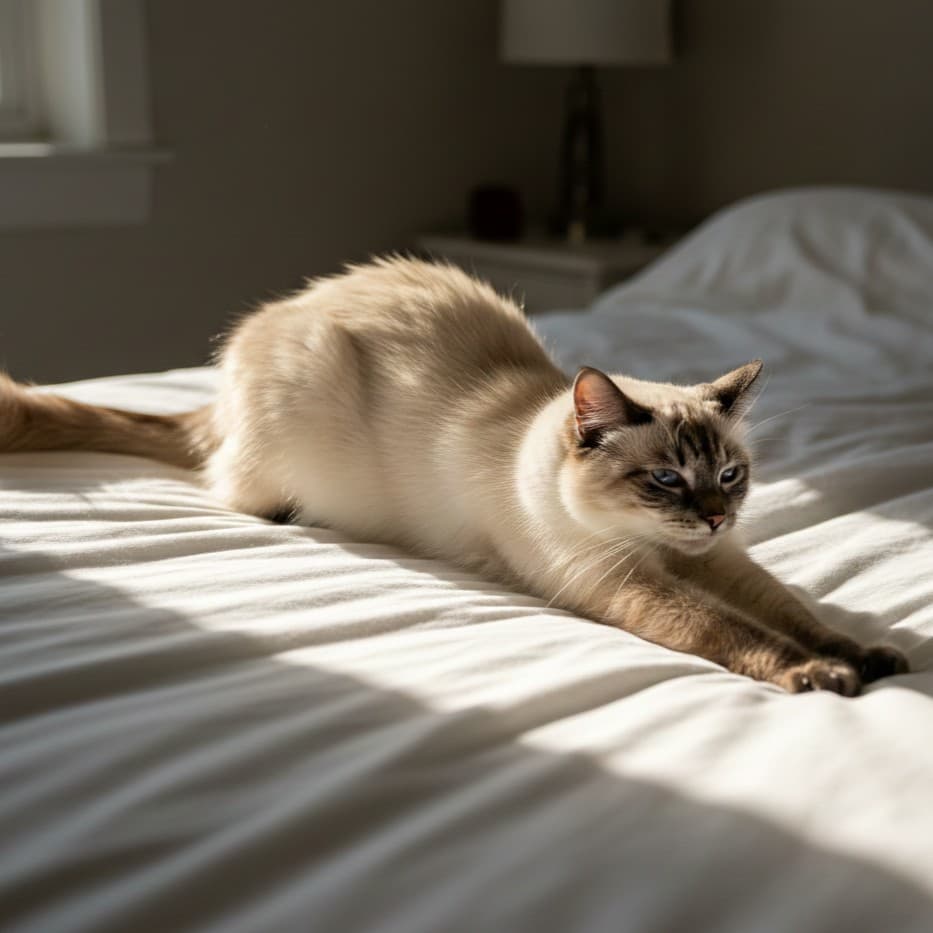
Javanese
The Javanese is a color variant of the Balinese, developed to include non-traditional point colors like red, cream, lynx, and tortie patterns. Despite the exotic-sounding name, they originated in the United States by crossing Balinese with Colorpoint Shorthairs. In 2008, CFA merged Javanese into the Balinese breed as a color division, though the name persists among enthusiasts and breeders. Known for their exceptional intelligence, vocal personalities, and deep devotion to their owners, Javanese cats are sometimes described as the most dog-like of all cat breeds. Their silky, medium-length coat and vivid blue eyes make them strikingly beautiful, while their interactive, communicative nature makes them unforgettable companions.
Key Stats
Weight
5-12 lbs
Height
8-11"
Lifespan
15-20 yrs
Energy
4/5
Is This Breed Right For You?
Origin & History
Javanese were developed in the 1970s in the United States when breeders crossed Balinese cats with Colorpoint Shorthairs to create a semi-longhaired cat with a wider range of colorful point patterns. The goal was to expand the color palette beyond the traditional four Siamese point colors while maintaining the elegant, flowing coat of the Balinese. CFA recognized them as a separate breed in 1987, acknowledging their unique color varieties.
However, in 2008, CFA made the controversial decision to merge Javanese back into the Balinese breed as a color division, effectively eliminating them as a standalone breed within that registry. TICA had always registered them simply as Balinese, not recognizing the distinction. Despite the official merger, the name Javanese persists among breeders and enthusiasts who appreciate the breed's expanded color palette.
The name Javanese was chosen to continue the Southeast Asian naming theme established by the Siamese and Balinese breeds, though the cats have no actual connection to the island of Java. Their development represents the creative evolution of the Siamese family of breeds, adding vibrant color options to an already beloved group of cats.
Traits & Characteristics
Individual cats may vary from breed-typical traits
Family & Social
Personality
Cattitude
Adaptability
Health & Wellness
Key health information for Javanese owners
Health Screening
- Hip & Elbow Evaluation
- Cardiac Exam
- Eye Certification
Exercise Needs
- 30+ minutes daily
- Mental stimulation important
- High energy breed
Watch For
- Progressive Retinal Atrophy (PRA)
- Amyloidosis
- Feline Asthma
- Hypertrophic Cardiomyopathy (HCM)
Care Guide
Everything you need to know about caring for a Javanese
Grooming
weekly
Exercise
30+ min/day
Training
Very Easy
Health
Generally Good
Training Your Javanese
Training Approach
Use positive reinforcement with treats and play. They respond well to training as a form of bonding. Keep sessions engaging and interactive.
Training Tips
- Highly food-motivated - use treats effectively
- Can learn tricks and commands easily
- Enjoy playing fetch
- Leash training works well with this breed
- Puzzle feeders provide mental stimulation
Common Challenges
- May become demanding if training is infrequent
- Can be vocal when displeased during training
- High intelligence means they bore easily
Is a Javanese Right For You?
Great Match If...
- You have children or a family
- You want an easy-to-train cat
- You're active and outdoorsy
- You want a loyal companion
Think Twice If...
- You want a low-energy cat
- You're away from home often
Frequently Asked Questions
Javanese and Balinese are essentially the same breed distinguished primarily by their point colors. Balinese have the traditional four Siamese colors (seal, chocolate, blue, and lilac points), while Javanese have non-traditional colors including red, cream, lynx (tabby), and tortie point patterns. The distinction was created because breeders crossed Balinese with Colorpoint Shorthairs to introduce these expanded color options.
In 2008, CFA made the controversial decision to officially merge the two under the Balinese name, making Javanese a color division rather than a separate breed. This move was debated among breeders, as some felt the distinct breeding programs warranted separate recognition. TICA had always registered them simply as Balinese, never recognizing the Javanese distinction at all.
Despite the official merger, the name Javanese persists among breeders and enthusiasts who value the distinction and the unique color varieties these cats offer. In terms of temperament, body type, coat texture, and care requirements, there is no meaningful difference between a Javanese and a Balinese. The choice between them comes down entirely to personal color preference.