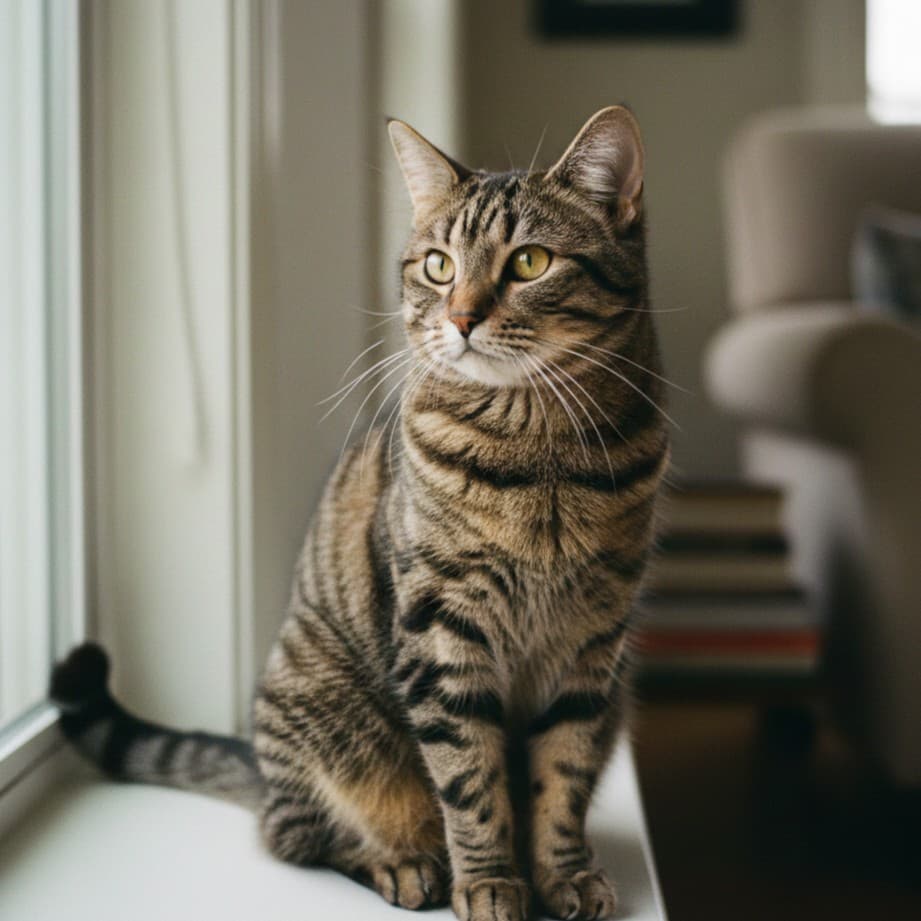
Japanese Bobtail
The Japanese Bobtail is an ancient breed from Japan, recognized for its distinctive pom-pom tail where no two tails are alike. Known as the inspiration for the Maneki-neko (beckoning cat) good luck symbol seen in businesses worldwide, these cats are active, intelligent, and highly social companions. Their tricolor mi-ke pattern is especially prized in their homeland. With a history spanning over a thousand years in Japanese culture and folklore, the Japanese Bobtail combines striking appearance with a vibrant, engaging personality. They are among the healthiest and most long-lived cat breeds, making them excellent companions for families seeking an active, entertaining, and devoted feline friend.
Key Stats
Weight
5-10 lbs
Height
8-10"
Lifespan
15-18 yrs
Energy
4/5
Is This Breed Right For You?
Origin & History
Japanese Bobtails have existed in Japan for over a thousand years, appearing in ancient artwork, paintings, and folklore dating back to at least the sixth century. They were originally kept to protect silkworm barns, rice stores, and grain warehouses from rodents, serving a vital economic function in Japanese society. Their importance was so great that in 1602, Japanese authorities ordered all cats released from their owners to combat a devastating rodent plague threatening the silk industry.
The mi-ke (tricolor calico) variety became especially revered as a symbol of good fortune, inspiring the iconic Maneki-neko beckoning cat figurine that remains ubiquitous in Japanese businesses today. The breed appeared in numerous woodblock prints and manuscripts throughout Japanese history, cementing their cultural significance.
American breeder Elizabeth Freret imported the first Japanese Bobtails to the United States in 1968, recognizing their unique qualities and beauty. CFA granted championship status to the shorthair variety in 1976, and the longhair variety received recognition later in 1993. TICA recognized them in 1979. Today, Japanese Bobtails are appreciated worldwide for their unique tails, vibrant personalities, and exceptional health, though they remain less common than many other breeds outside Japan.
Traits & Characteristics
Individual cats may vary from breed-typical traits
Family & Social
Personality
Cattitude
Adaptability
Health & Wellness
Key health information for Japanese Bobtail owners
Health Screening
- Hip & Elbow Evaluation
- Cardiac Exam
- Eye Certification
Exercise Needs
- 30+ minutes daily
- Mental stimulation important
- High energy breed
Watch For
- Obesity
Care Guide
Everything you need to know about caring for a Japanese Bobtail
Grooming
weekly
Exercise
30+ min/day
Training
Very Easy
Health
Generally Good
Training Your Japanese Bobtail
Training Approach
Use positive reinforcement with treats, play, and praise. Keep sessions short and fun. They respond well to clicker training and enjoy the mental challenge of learning new behaviors.
Training Tips
- Learn tricks quickly including fetch
- Respond well to clicker training
- Can be leash trained for outdoor walks
- Enjoy puzzle feeders and interactive toys
- May learn to open doors and cabinets
Common Challenges
- May become bored without mental stimulation
- Can be mischievous if understimulated
- Their intelligence means they may outwit barriers
Is a Japanese Bobtail Right For You?
Great Match If...
- You have children or a family
- You want an easy-to-train cat
- You're active and outdoorsy
- You want a loyal companion
Think Twice If...
- You want a low-energy cat
- You're away from home often
Frequently Asked Questions
Japanese Bobtails make exceptional family pets and are consistently recommended for households with children. They are patient, playful, and tolerant with kids of all ages, enjoying the interactive games and attention that children provide. Their gentle temperament means they rarely react aggressively even during enthusiastic handling, making them one of the safest breeds for young children.
They get along wonderfully with other cats and cat-friendly dogs, making them ideal for multi-pet families. In Japan, they have been beloved family companions for over a thousand years, and their adaptable social nature reflects centuries of living closely with humans. They form strong bonds with all family members rather than attaching to just one person.
Their robust health, minimal grooming needs, and long lifespan of 15-18 years make them practical family pets as well. They become enthusiastic participants in family life, greeting everyone at the door and joining in household activities with their characteristic melodic vocalizations.