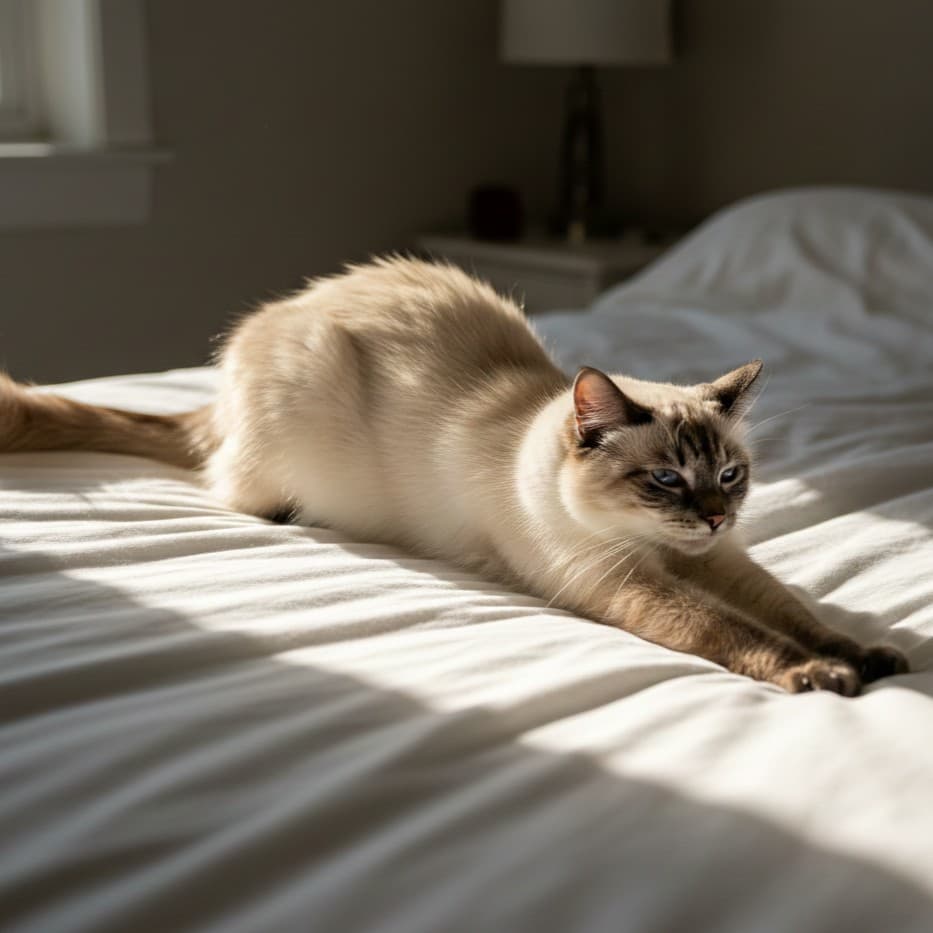
Oriental Shorthair
The Oriental Shorthair is the colorful cousin of the Siamese, sharing the same elegant, tubular body and striking almond-shaped eyes but in a rainbow of over 300 color and pattern combinations. These intensely social, highly intelligent cats are known for their extreme vocalization and unwavering devotion to their owners. They are often described as dog-like in their loyalty and demand constant companionship. With their large, bat-like ears, sleek bodies, and dramatic personalities, Oriental Shorthairs are unmistakable in both appearance and temperament. They bring energy, conversation, and endless entertainment to every household they join, though their intense needs make them best suited for experienced, devoted cat owners.
Key Stats
Weight
5-12 lbs
Height
8-11"
Lifespan
12-15 yrs
Energy
5/5
Is This Breed Right For You?
Origin & History
The Oriental Shorthair was developed in England during the 1950s through 1970s when breeders sought to recreate colors lost during World War II and expand the Siamese color palette beyond the traditional pointed pattern. By crossing Siamese with Russian Blues, British Shorthairs, Abyssinians, and domestic shorthairs, breeders created cats with the distinctive Siamese body type but in non-pointed colors and patterns.
The breeding program was highly successful, producing an astonishing variety of colors while maintaining the elegant Siamese conformation and outgoing personality. CFA recognized the breed in 1977, and TICA followed suit. The breed quickly gained popularity among cat fanciers who appreciated the Siamese personality in a broader color palette.
Today, Oriental Shorthairs are recognized in over 300 color and pattern combinations, more than any other cat breed. This incredible diversity includes solids, tabbies, smokes, shadings, bi-colors, and parti-colors. Despite their visual variety, all Oriental Shorthairs share the same devoted, vocal, and intensely social personality that defines the breed.
Traits & Characteristics
Individual cats may vary from breed-typical traits
Family & Social
Personality
Cattitude
Adaptability
Health & Wellness
Key health information for Oriental Shorthair owners
Health Screening
- Hip & Elbow Evaluation
- Cardiac Exam
- Eye Certification
Exercise Needs
- 40+ minutes daily
- Mental stimulation important
- High energy breed
Watch For
- Amyloidosis
- Dental Disease
- Progressive Retinal Atrophy (PRA)
- Hypertrophic Cardiomyopathy (HCM)
Care Guide
Everything you need to know about caring for a Oriental Shorthair
Grooming
weekly
Exercise
40+ min/day
Training
Very Easy
Health
Generally Good
Training Your Oriental Shorthair
Training Approach
Use positive reinforcement with treats, play rewards, and verbal praise. Keep sessions short but frequent. Clicker training is highly effective. They enjoy learning and will often demand training sessions.
Training Tips
- Learn tricks and commands very quickly
- Can be leash trained for outdoor adventures
- Excel at puzzle toys and food puzzles
- Enjoy fetch and interactive games
- Respond well to clicker training
Common Challenges
- May become demanding if not stimulated enough
- Can become mischievous when bored
- Extremely vocal when wanting attention
- May outsmart their owners
Is a Oriental Shorthair Right For You?
Great Match If...
- You have children or a family
- You want an easy-to-train cat
- You're active and outdoorsy
- You want a loyal companion
Think Twice If...
- You want a low-energy cat
- You're away from home often
Frequently Asked Questions
Oriental Shorthairs can make excellent family pets for the right household, but they require a specific type of family environment to truly thrive. They are playful, deeply engaging, and form intense bonds with every family member, offering a level of interaction and personality that few other breeds can match. However, they are demanding of attention and extremely vocal, which may not suit all families, especially those seeking a quiet, low-maintenance pet.
They do best with older children who can match their boundless energy and respect their need for regular interaction and gentle handling. Their sensitive temperament means very young or rough children may overwhelm them, leading to stress or withdrawal. Supervision is recommended with younger children, and teaching kids appropriate cat interaction is essential.
Families should be prepared for a cat that wants to be involved in absolutely everything, from cooking dinner to folding laundry, and will vocally protest being ignored or excluded from activities. Their constant commentary and need for engagement is entertaining for cat enthusiasts but can be overwhelming for families unaccustomed to such an opinionated, interactive feline companion.