American Curl
The American Curl is a distinctive breed known for its uniquely curved ears that curl backward in a graceful arc of 90 to 180 degrees, giving these cats an alert, happily surprised expression that captivates everyone who encounters them. This relatively rare breed is cherished for its affectionate, gentle personality and kitten-like playfulness that lasts throughout life, earning them the beloved nickname of the Peter Pan of the cat world. All American Curls in existence trace their ancestry to a single stray cat named Shulamith, found on a doorstep in Lakewood, California in 1981. Available in both shorthair and longhair varieties and every color and pattern imaginable, these medium-sized cats combine a uniquely striking appearance with one of the sweetest, most accommodating temperaments in the cat fancy. Unlike the Scottish Fold mutation, the American Curl's ear gene carries no associated health problems, making them one of the healthiest pedigreed breeds. They are ideal companions for families, first-time owners, seniors, and anyone seeking a gentle, affectionate, and endlessly charming feline friend.
Key Stats
Weight
5-10 lbs
Height
9-12"
Lifespan
12-16 yrs
Energy
3/5
Is This Breed Right For You?
Origin & History
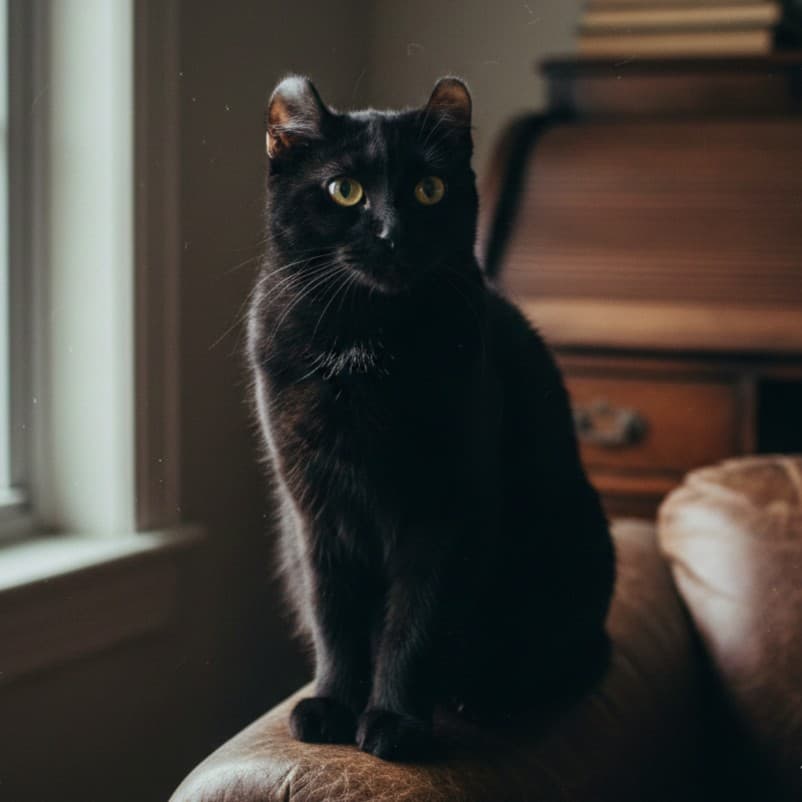
The American Curl has one of the most precisely documented origin stories in the cat world. In June 1981, Joe and Grace Ruga found a longhaired black stray cat with unusual backward-curling ears on their doorstep in Lakewood, California. Charmed by her silky coat and sweet disposition, they named her Shulamith, a Hebrew name meaning black but comely.
When Shulamith had her first litter of four kittens in December 1981, two of the kittens displayed the same distinctive curled ears. This immediately suggested a genetic basis for the trait. Cat fancier Nancy Kiester wrote about these unusual kittens in a 1983 article, which caught the attention of the cat fancy community. Geneticist Roy Robinson analyzed data from 81 litters involving Curls and confirmed that the ear-curling gene is autosomal dominant, meaning only one copy is needed to produce curled ears.
Importantly, Robinson found no defects associated with the gene, distinguishing it from the Scottish Fold mutation, which can cause cartilage and bone problems throughout the body. This clean genetic profile allowed breeders to develop the American Curl without the health concerns that plague some other ear-mutation breeds.
TICA granted the American Curl championship status in 1992, making it the first breed to achieve championship status in both longhair and shorthair divisions simultaneously. CFA followed with full recognition in 1999. The breed was developed using outcrosses to domestic cats, which contributed to their exceptional genetic diversity and robust health, giving them one of the broadest gene pools of any pedigreed breed.
The American Curl's development represents a textbook case of responsible breed establishment, with genetic research guiding breeding decisions from the very beginning. Today, every American Curl in the world can trace its lineage back to Shulamith, making the breed's genetic history uniquely traceable and well-documented. This singular origin story, combined with their outstanding health and sweet temperament, has earned them a devoted following among cat fanciers worldwide.
Traits & Characteristics
Individual cats may vary from breed-typical traits
Family & Social
Personality
Cattitude
Adaptability
Health & Wellness
Key health information for American Curl owners
Health Screening
- Hip & Elbow Evaluation
- Cardiac Exam
- Eye Certification
Exercise Needs
- 20+ minutes daily
- Mental stimulation important
- Moderate activity
Watch For
- Dental Disease
Care Guide
Everything you need to know about caring for a American Curl
Grooming
weekly
Exercise
20+ min/day
Training
Very Easy
Health
Generally Good
Training Your American Curl
Training Approach
Use positive reinforcement with treats and praise. Keep sessions short and fun. They respond well to gentle handling.
Training Tips
- Start training while young
- Use positive reinforcement
- Interactive toys maintain interest
- Can learn to fetch and come when called
Common Challenges
- May be more interested in play than training
- Handle ears gently during training
Is a American Curl Right For You?
Great Match If...
- You have children or a family
- You want an easy-to-train cat
- You're active and outdoorsy
- You want a loyal companion
Think Twice If...
Frequently Asked Questions
American Curls have a natural genetic mutation that causes their ear cartilage to curve backward in a graceful arc of 90 to 180 degrees, creating their signature surprised, alert expression. This is caused by an autosomal dominant gene, meaning only one copy is needed to produce curled ears. The degree of curl varies between individuals, ranging from a subtle 90-degree arc to a dramatic 180-degree sweep, with show-quality cats typically displaying more pronounced curvature.
Importantly, unlike the Scottish Fold mutation which can cause painful skeletal and cartilage problems throughout the body, the American Curl's ear gene does not cause any other health problems whatsoever. Geneticist Roy Robinson confirmed this through extensive study of 81 litters, establishing that the gene affects only the ear cartilage with no associated defects in joints, bones, or other body systems.
All American Curls in the world descend from a single stray cat named Shulamith, found on a doorstep in Lakewood, California in 1981. This singular origin makes the breed's genetic history uniquely traceable and well-documented, a rarity in the cat fancy world.