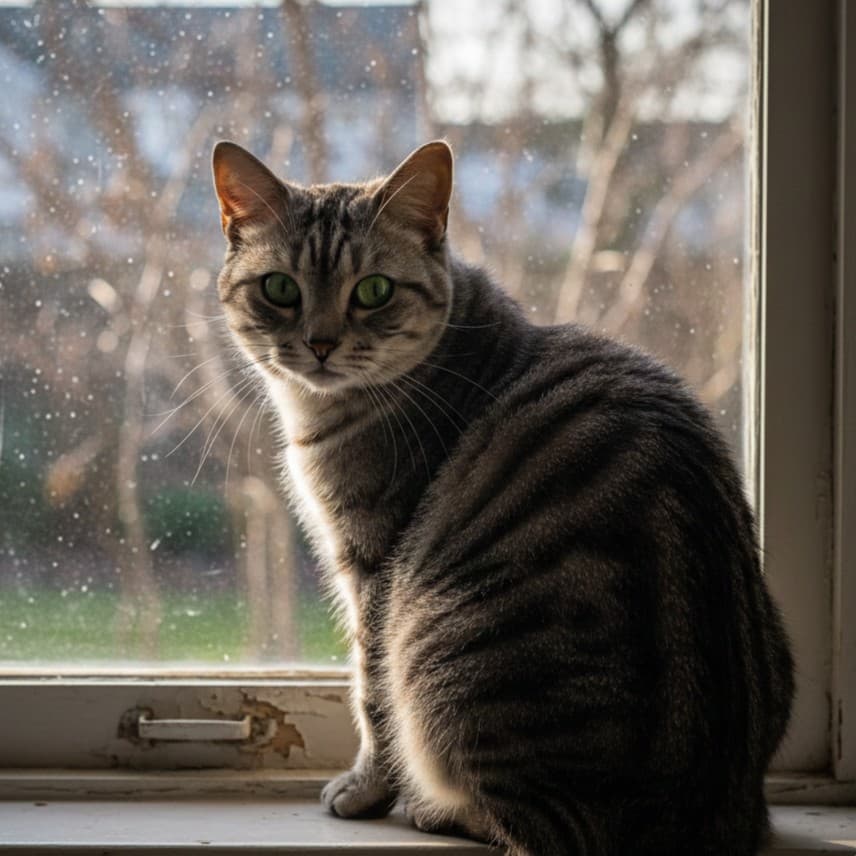
Scottish Fold
The Scottish Fold is a distinctive cat breed known for its unique folded ears that give it an endearing 'owl-like' appearance. Originating from a natural genetic mutation discovered in Scotland in 1961, these sweet-tempered cats are prized for their gentle, affectionate personalities and remarkably quiet dispositions. They form deep, devoted bonds with their families and adapt exceptionally well to various living situations, from apartments to larger homes. Importantly, not all Scottish Folds have folded ears; those with straight ears are called Scottish Straights and do not carry the gene linked to the breed's cartilage condition. The breed remains controversial due to health concerns, but their wonderful temperament has earned them a dedicated following worldwide.
Key Stats
Weight
6-13 lbs
Height
8-10"
Lifespan
11-14 yrs
Energy
3/5
Is This Breed Right For You?
Origin & History
The Scottish Fold originated from a white barn cat named Susie, discovered in 1961 on a farm near Coupar Angus in Perthshire, Scotland. Susie had unusual folded ears caused by a natural dominant gene mutation affecting ear cartilage. A local shepherd named William Ross was captivated by Susie's unique appearance and obtained one of her kittens, a female named Snooks. Ross began a breeding program with the guidance of geneticist Pat Turner, who helped establish the breed's foundation.
The breed was registered with the Governing Council of the Cat Fancy (GCCF) in the United Kingdom in 1966, but British registries later withdrew recognition due to growing concerns about associated ear infections and the cartilage condition osteochondrodysplasia. Development continued enthusiastically in the United States, where breeders crossed Folds with American Shorthairs and British Shorthairs to strengthen the gene pool. CFA granted the Scottish Fold championship status in 1978, and the breed gained widespread popularity in North America.
The breed remains controversial internationally due to the inseparable genetic link between the desirable folded ears and painful joint problems. Several countries, including Scotland itself, have considered or enacted restrictions on breeding Scottish Folds. Animal welfare organizations continue to debate whether breeding cats with this known genetic condition is ethical.
Traits & Characteristics
Individual cats may vary from breed-typical traits
Family & Social
Personality
Cattitude
Adaptability
Health & Wellness
Key health information for Scottish Fold owners
Health Screening
- Hip & Elbow Evaluation
- Cardiac Exam
- Eye Certification
Exercise Needs
- 15+ minutes daily
- Mental stimulation important
- Moderate activity
Watch For
- Hypertrophic Cardiomyopathy (HCM)
- Polycystic Kidney Disease (PKD)
- Ear Infections (Otitis)
- Obesity
Care Guide
Everything you need to know about caring for a Scottish Fold
Grooming
weekly
Exercise
15+ min/day
Training
Moderate
Health
Monitor Closely
Training Your Scottish Fold
Training Approach
Use positive reinforcement with treats and soft praise. Keep sessions short and low-stress. Their desire to be near you can be used to motivate training. Never use harsh corrections.
Training Tips
- Food rewards are highly effective
- Can learn to play fetch
- Respond well to clicker training
- Gentle, patient approach works best
- Enjoy puzzle feeders for mental stimulation
Common Challenges
- May be too laid-back for intensive training
- Physical activities should be gentle
- Avoid stressing joints with high jumps
Is a Scottish Fold Right For You?
Great Match If...
- You have children or a family
- You're active and outdoorsy
- You want a loyal companion
Think Twice If...
- Budget is tight for vet bills
- You're away from home often
Frequently Asked Questions
No, not all Scottish Folds have folded ears, which is an important distinction that many prospective owners are unaware of. All kittens in a Scottish Fold litter are born with straight ears, and the characteristic fold develops around 3-4 weeks of age only in those kittens carrying the dominant Fd gene mutation. Cats whose ears remain straight are classified as Scottish Straights.
From a responsible Fold-to-Straight breeding, approximately 50% of kittens will develop folded ears and 50% will retain straight ears. The degree of fold also varies: single folds have a loose bend, double folds are tighter, and triple folds lie completely flat against the head. Tighter folds are preferred in the show ring but the fold degree does not indicate the severity of associated health conditions.
Crucially, Scottish Straights do not carry the gene associated with osteochondrodysplasia, the painful cartilage and joint condition that affects all folded-ear cats to some degree. For owners who love the Scottish Fold personality but are concerned about health implications, a Scottish Straight offers the same sweet, gentle temperament without the joint disease risk.