
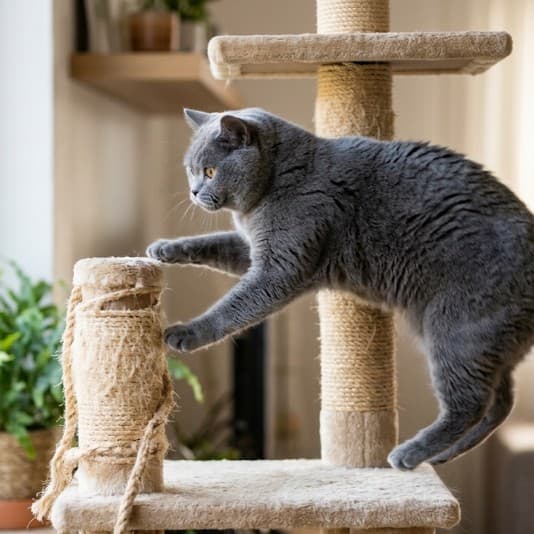
British Shorthair
The British Shorthair is one of the oldest and most beloved cat breeds in the world, renowned for their round faces, dense plush coats, and calm, dignified demeanor. Often compared to teddy bears for their soft, approachable appearance, they are the quintessential companion cat for owners who appreciate a quiet, independent, and undemanding feline friend. The classic 'British Blue' with its solid blue-gray coat and copper eyes is the most iconic variety, and the breed famously inspired the Cheshire Cat from Lewis Carroll's Alice in Wonderland. British Shorthairs consistently rank among the most popular cat breeds worldwide, and their combination of striking appearance, gentle temperament, and low-maintenance care makes them an enduring favorite among cat enthusiasts of all experience levels.
Key Stats
Weight
8-17 lbs
Height
10-14"
Lifespan
12-17 yrs
Energy
2/5
Is This Breed Right For You?
Origin & History
British Shorthairs descended from cats brought to Britain by Roman soldiers around 2,000 years ago. These Roman cats interbred with native wild cats, developing into sturdy, resilient working cats that earned their keep as mousers in homes, barns, and ships throughout the British Isles. For centuries, they were simply common domestic cats valued for their practical skills rather than their appearance.
The breed's transition from working cat to pedigreed show cat began in the Victorian era. Harrison Weir, considered the father of the cat fancy, organized the first cat show at London's Crystal Palace in 1871, where British Shorthairs were prominently featured. Weir was a particular champion of the breed, and his advocacy helped establish them as one of the first recognized pedigreed cat breeds.
Both World Wars devastated the British Shorthair population. During the wars, breeding programs were abandoned, and the population dwindled dangerously. After each conflict, breeders worked to rebuild the breed through careful outcrossing with Persians, which contributed to the round, plush features characteristic of the modern British Shorthair. Russian Blues, Chartreux, and other breeds also contributed to the rebuilding effort.
The breed gained recognition across major international registries throughout the latter twentieth century. TICA recognized them in 1979, and CFA followed with championship status in 1980. Today, British Shorthairs are consistently among the top breeds in registries worldwide, beloved for the same qualities that Harrison Weir championed over 150 years ago: their sturdy build, beautiful coat, and gentle, reliable temperament.
Traits & Characteristics
Individual cats may vary from breed-typical traits
Family & Social
Personality
Cattitude
Adaptability
Health & Wellness
Key health information for British Shorthair owners
Health Screening
- Hip & Elbow Evaluation
- Cardiac Exam
- Eye Certification
Exercise Needs
- 15+ minutes daily
- Mental stimulation important
- Moderate activity
Watch For
- Hypertrophic Cardiomyopathy (HCM)
- Obesity
- Gingivitis/Stomatitis
Care Guide
Everything you need to know about caring for a British Shorthair
Grooming
weekly
Exercise
15+ min/day
Training
Moderate
Health
Generally Good
Training Your British Shorthair
Training Approach
Use positive reinforcement with treats. Keep sessions short and interesting. Don't force participation - they prefer to supervise.
Training Tips
- Food rewards work well
- Can learn basic commands
- Prefer watching to active participation
- May train better when young
Common Challenges
- Independent nature may resist training
- Prefer supervising to participating
- May become stubborn if pushed
Is a British Shorthair Right For You?
Great Match If...
- You have children or a family
- You want a loyal companion
Think Twice If...
Frequently Asked Questions
Yes, the British Shorthair is widely believed to have inspired John Tenniel's famous illustration of the Cheshire Cat in Lewis Carroll's Alice in Wonderland. Their round faces, prominent chubby cheeks, and the apparent gentle 'smile' created by their well-developed whisker pads perfectly match the character's enigmatic grinning expression. The breed's calm, somewhat mysterious demeanor also aligns with the Cheshire Cat's personality in the story. While Carroll never explicitly identified the breed, the visual resemblance between Tenniel's iconic illustrations and the British Shorthair is remarkably strong, making this connection one of the breed's most charming claims to fame in popular culture.