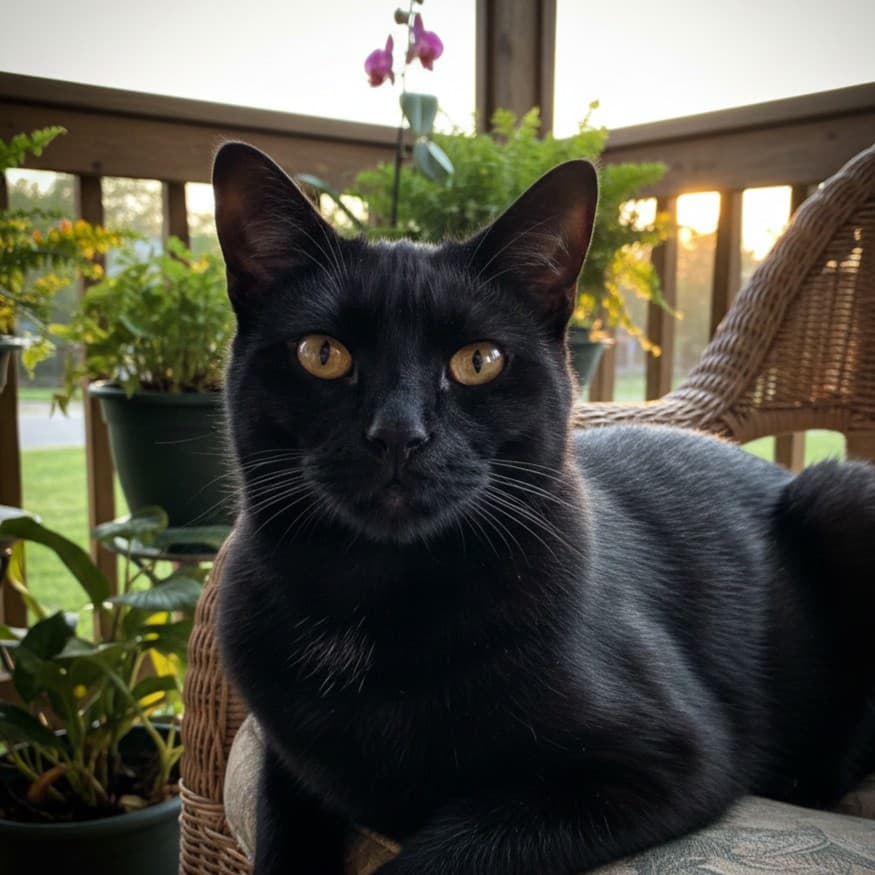
Burmese
The Burmese is a social, affectionate breed known for its satin-like coat, compact muscular build, and extraordinary dog-like devotion to its family. All modern Burmese trace their ancestry back to Wong Mau, a single cat brought to America in 1930. They are extremely people-oriented, vocal with sweet distinctive voices, and playful throughout their remarkably long lives. Often called 'Velcro cats' for their unwillingness to be separated from their humans, Burmese are frequently described as the most dog-like of all cat breeds. They follow their owners devotedly, play fetch, learn tricks, greet visitors at the door, and demand to be involved in every aspect of family life. Their combination of intelligence, affection, and playful spirit makes them one of the most rewarding companion cat breeds for owners who can provide the extensive social interaction they require.
Key Stats
Weight
6-12 lbs
Height
9-12"
Lifespan
15-18 yrs
Energy
4/5
Is This Breed Right For You?
Origin & History
The Burmese breed traces its origins to a single remarkable cat named Wong Mau, a small, walnut-brown female brought to San Francisco in 1930 by Dr. Joseph C. Thompson, a Navy psychiatrist who had been stationed in Southeast Asia. Wong Mau was a compact, dark-coated cat with darker points, clearly different from the Siamese cats that were familiar at the time. She was actually a Burmese-Siamese hybrid, what would today be recognized as a Tonkinese.
Dr. Thompson, working with geneticist Dr. Clyde Keeler and other collaborators, began a careful breeding program to establish the Burmese type. Through selective crosses with Siamese cats and subsequent backcrosses, they isolated the Burmese gene (cb), which produced the characteristic rich, warm brown coloring. CFA recognized the Burmese in 1936, making it one of the earliest breeds to gain official recognition.
The breed's popularity led to problems. Demand exceeded supply, and some breeders began excessive outcrossing to Siamese, diluting the Burmese type. CFA suspended recognition in 1947 due to concerns about breed purity. Dedicated breeders worked to restore the breed's distinctive characteristics, and CFA reinstated recognition in 1954 after three generations of pure Burmese breeding were documented.
TICA recognized the Burmese in 1979. Today, CFA recognizes four colors: sable (the original rich brown), champagne (warm beige), blue (soft blue-gray), and platinum (pale gray with fawn undertones). The breed has diverged into two distinct types: the American Burmese, with its rounder, more compact body, and the European Burmese, with a more wedge-shaped head and slender build, which is registered as a separate breed by most organizations.
Traits & Characteristics
Individual cats may vary from breed-typical traits
Family & Social
Personality
Cattitude
Adaptability
Health & Wellness
Key health information for Burmese owners
Health Screening
- Hip & Elbow Evaluation
- Cardiac Exam
- Eye Certification
Exercise Needs
- 30+ minutes daily
- Mental stimulation important
- High energy breed
Watch For
- Hypertrophic Cardiomyopathy (HCM)
- Diabetes Mellitus
Care Guide
Everything you need to know about caring for a Burmese
Grooming
weekly
Exercise
30+ min/day
Training
Very Easy
Health
Generally Good
Training Your Burmese
Training Approach
Use positive reinforcement with treats and play. Keep sessions engaging and varied. They love interactive training as bonding time.
Training Tips
- Learn tricks quickly and eagerly
- Enjoy fetch and interactive games
- Can be leash trained
- Puzzle toys provide mental stimulation
Common Challenges
- May become demanding if training is too infrequent
- Need constant mental stimulation
- May get into mischief if bored
Is a Burmese Right For You?
Great Match If...
- You have children or a family
- You want an easy-to-train cat
- You're active and outdoorsy
- You want a loyal companion
Think Twice If...
- You want a low-energy cat
- You're away from home often
Frequently Asked Questions
Burmese are exceptional family pets and one of the best cat breeds for households with children. They are patient, tolerant, and genuinely playful with kids of all ages, often enjoying being carried around and played with in ways that would test the patience of most other breeds. Their robust, muscular build handles enthusiastic handling well, and their love of interactive games makes them ideal companions for active families. Their social nature means they want to be involved in every aspect of family life, from morning routines to bedtime. They get along well with other pets and thrive in busy households where there is always someone around to interact with. Their dog-like loyalty and affectionate disposition make them uniquely rewarding family companions.