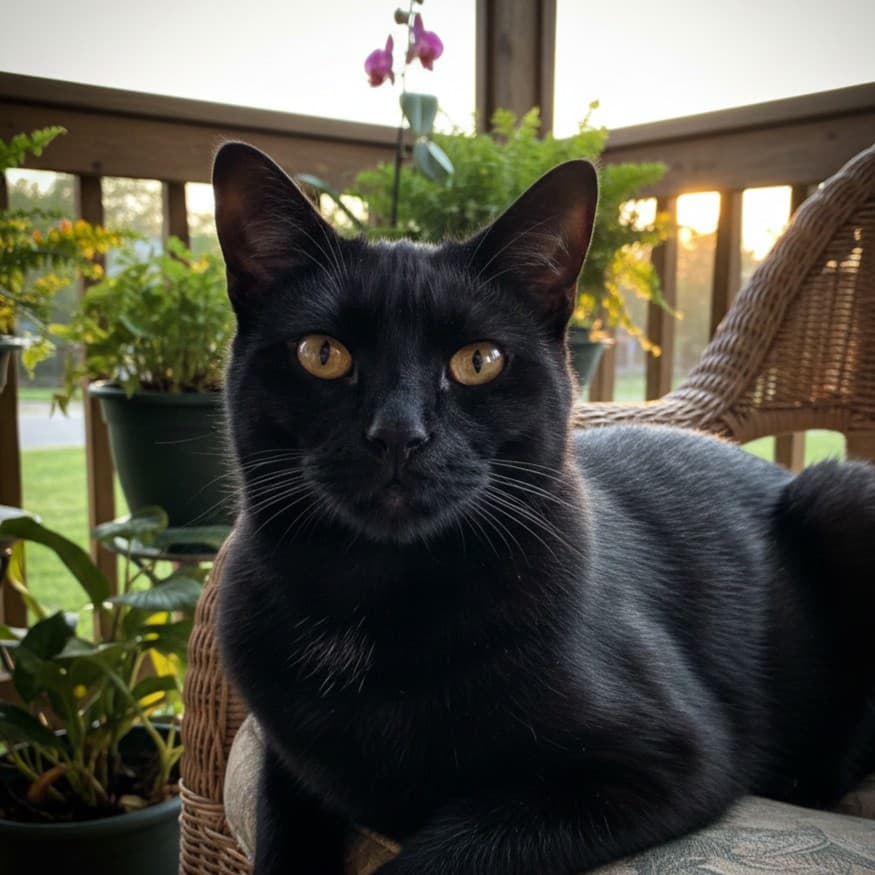
European Burmese
The European Burmese is an elegant, people-oriented cat with a more moderate body type than its American cousin. Known for its stunning satin-like coat available in ten beautiful colors including tortoiseshell variations, this breed combines striking beauty with an exceptionally affectionate and playful temperament. European Burmese are true companion cats who form deep bonds with their families and participate actively in every aspect of household life. Often described as 'dog-like' in their devotion, European Burmese follow their owners from room to room, greet them at the door, and want to be involved in everything from cooking to working. Their exceptional intelligence and trainability make them among the most interactive cat breeds available. They maintain kitten-like playfulness well into old age and are known for their soft, sweet voices. With their gentle nature, patience with children, and love of companionship, they are ideal for families who want a cat that truly becomes part of daily life.
Key Stats
Weight
6-12 lbs
Height
9-12"
Lifespan
14-18 yrs
Energy
4/5
Is This Breed Right For You?
Origin & History
The European Burmese shares its earliest ancestry with the American Burmese, both tracing their roots to Wong Mau, a small brown female cat brought from Burma to the United States by Dr. Joseph Thompson in 1930. Wong Mau was bred with a Siamese male, and the resulting kittens established the foundation for the Burmese breed. Early Burmese cats were exported to Britain and Europe, where the breed's development took a distinctly different path.
After World War II, breeding programs in Britain diverged significantly from American standards due to different available gene pools and different breeding goals. British breeders outcrossed to red-point Siamese cats, introducing the red gene and creating the beautiful tortoiseshell color variations that distinguish the European Burmese from its American counterpart. While American breeders favored a rounder, more cobby body type with a shorter face, British and European breeders developed a more moderate, elegant body with a gently wedge-shaped head.
The British breeding programs also introduced the tortoiseshell gene through these Siamese outcrosses, creating the beautiful brown tortie, blue tortie, chocolate tortie, and lilac tortie color variations that are unique to the European Burmese. Meanwhile, the European cats maintained a healthier, more moderate head structure compared to the increasingly rounded American Burmese. Over decades, these differences in body type, head shape, and available colors became significant enough that the two populations could no longer reasonably be considered the same breed. The CFA formally recognized the European Burmese as a separate breed in 1994, acknowledging the distinct differences in body type, head shape, and color range from the American Burmese standard. TICA also recognized the breed. Today, the European Burmese is celebrated for its elegant beauty, expanded color palette of ten colors including four tortoiseshell variations, and its exceptionally devoted, affectionate temperament that has earned it a dedicated following worldwide.
Traits & Characteristics
Individual cats may vary from breed-typical traits
Family & Social
Personality
Cattitude
Adaptability
Health & Wellness
Key health information for European Burmese owners
Health Screening
- Hip & Elbow Evaluation
- Cardiac Exam
- Eye Certification
Exercise Needs
- 30+ minutes daily
- Mental stimulation important
- High energy breed
Watch For
- Hypertrophic Cardiomyopathy (HCM)
- Diabetes Mellitus
- Dental Disease
- Hypokalaemia
Care Guide
Everything you need to know about caring for a European Burmese
Grooming
weekly
Exercise
30+ min/day
Training
Very Easy
Health
Generally Good
Training Your European Burmese
Training Approach
Use positive reinforcement with treats, praise, and play rewards. Keep sessions short (5-10 minutes) and varied to maintain interest. They respond exceptionally well to clicker training.
Training Tips
- Learn tricks quickly and eagerly participate
- Excel at fetch and retrieval games
- Can be leash trained with patience
- Enjoy puzzle feeders and interactive toys
- Respond well to clicker training
Common Challenges
- May become demanding if training stops
- Can become bored without variety
- May outsmart simple puzzle toys quickly
- Need consistent mental engagement
Is a European Burmese Right For You?
Great Match If...
- You have children or a family
- You want an easy-to-train cat
- You're active and outdoorsy
- You want a loyal companion
Think Twice If...
- You want a low-energy cat
- You're away from home often
Frequently Asked Questions
The key differences between European and American Burmese lie in body type, head shape, and color range. American Burmese have rounder, more cobby bodies with distinctly rounded heads, shorter muzzles, and only four recognized colors: sable, champagne, blue, and platinum. European Burmese have a more moderate, elegant body type with a gently wedge-shaped head that is considered healthier and more anatomically moderate.
The most dramatic difference is color range. European Burmese come in ten colors, including red, cream, and four tortoiseshell variations (brown tortie, blue tortie, chocolate tortie, and lilac tortie) that are not found in the American standard. These additional colors were introduced through outcrossing to red-point Siamese during the breed's development in Britain after World War II.
Both share the characteristic satin-like coat texture and deeply affectionate, people-oriented personality that defines the Burmese family. However, the physical differences became significant enough that CFA formally recognized them as separate breeds in 1994. European Burmese are sometimes considered the healthier of the two varieties due to their more moderate facial structure, which avoids the extreme shortening seen in some American Burmese lines.