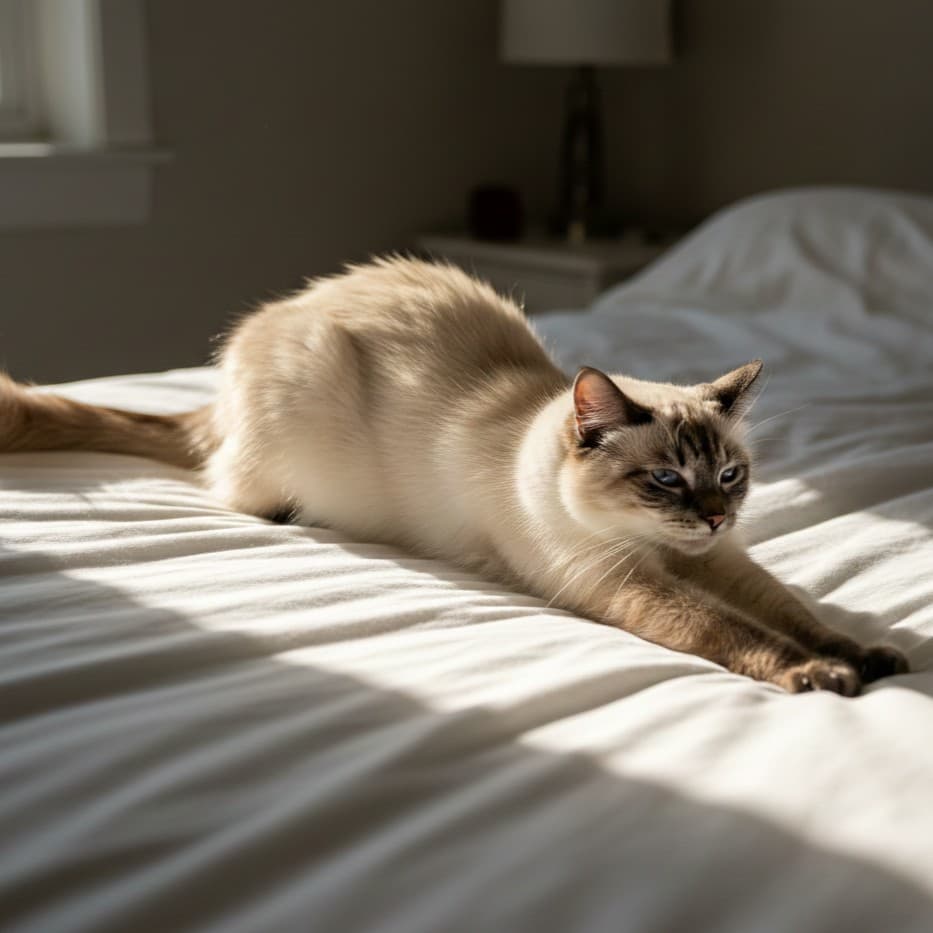
Turkish Angora
The Turkish Angora is one of the oldest natural cat breeds, originating from the Ankara region of Turkey where they were treasured as national treasures for centuries. Known for their elegant, balletic grace, silky single coats, and sparkling personalities, Turkish Angoras are intelligent, playful, and determined cats who form deep bonds with their families. Their classic white coat with blue or odd-colored eyes is iconic, though they actually come in a wide variety of colors and patterns. These ancient cats combine beauty with brains and athleticism, making them captivating companions for those who appreciate an active, engaging feline partner.
Key Stats
Weight
5-12 lbs
Height
7-10"
Lifespan
12-18 yrs
Energy
4/5
Is This Breed Right For You?
Origin & History
Turkish Angoras are among the oldest natural cat breeds in the world, with documented history dating back to 15th century Turkey. They were named after Ankara (formerly Angora), the Turkish capital, where they developed naturally over centuries in the harsh climate of central Anatolia. European travelers brought them to Europe in the 1600s, where they quickly became prized by French and British aristocracy as exotic luxury pets.
The breed nearly became extinct in the early 20th century as breeders used them extensively in Persian breeding programs, diluting the pure Angora lines. Recognizing the danger, the Turkish government established a breeding program at the Ankara Zoo specifically to protect and preserve pure white Turkish Angoras. This conservation effort is credited with saving the breed from extinction.
CFA accepted Turkish Angoras for registration in 1968 and granted championship status in 1973, initially only for white cats. Recognition was later expanded to include all colors. Today, Turkish Angoras remain relatively rare outside Turkey, where pure white specimens are still considered national treasures with historically restricted export.
Traits & Characteristics
Individual cats may vary from breed-typical traits
Family & Social
Personality
Cattitude
Adaptability
Health & Wellness
Key health information for Turkish Angora owners
Health Screening
- Hip & Elbow Evaluation
- Cardiac Exam
- Eye Certification
Exercise Needs
- 30+ minutes daily
- Mental stimulation important
- High energy breed
Watch For
- Congenital Deafness
- Hypertrophic Cardiomyopathy (HCM)
- Hereditary Ataxia
- Dental Disease
Care Guide
Everything you need to know about caring for a Turkish Angora
Grooming
weekly
Exercise
30+ min/day
Training
Very Easy
Health
Generally Good
Training Your Turkish Angora
Training Approach
Use positive reinforcement with treats and praise. Keep sessions engaging and varied, as they can become bored with repetition. Their natural curiosity makes them eager participants in training activities.
Training Tips
- Can learn tricks like fetch, sit, and high-five
- Respond well to clicker training
- Enjoy puzzle toys and food puzzles
- Can be leash trained for supervised outdoor time
- Learn to open doors and cabinets - childproof as needed
Common Challenges
- Strong-willed and may resist unwanted activities
- Can become mischievous if bored
- Their determination means they persist in getting what they want
- May outsmart containment attempts
Is a Turkish Angora Right For You?
Great Match If...
- You have children or a family
- You want an easy-to-train cat
- You're active and outdoorsy
- You want a loyal companion
Think Twice If...
- You want a low-energy cat
- You're away from home often
Frequently Asked Questions
Yes, Turkish Angoras make wonderful family pets for active households that appreciate their energetic, engaging personalities. They are playful, affectionate, and form intensely strong bonds with their families, rating 5 out of 5 for family affection. They generally get along well with children who respect their space and enjoy interactive play such as fetch, wand toy games, and the acrobatic displays these athletic cats love to perform.
Their dog-like devotion and exceptional intelligence, rated 5 out of 5, make them captivating companions who follow their favorite family members from room to room and want to participate in every household activity. They often choose one primary person to bond with most intensely, though they remain affectionate with the entire family.
However, they demand attention and do not tolerate being ignored, rating just 2 out of 5 for alone tolerance. They may become vocal, anxious, or mischievous if they feel neglected. They are best suited for families where someone is home regularly and can provide daily interaction, at least 30 minutes of active playtime, and genuine engagement. Families with older children who enjoy interactive play will find Turkish Angoras especially rewarding companions.