Abyssinian
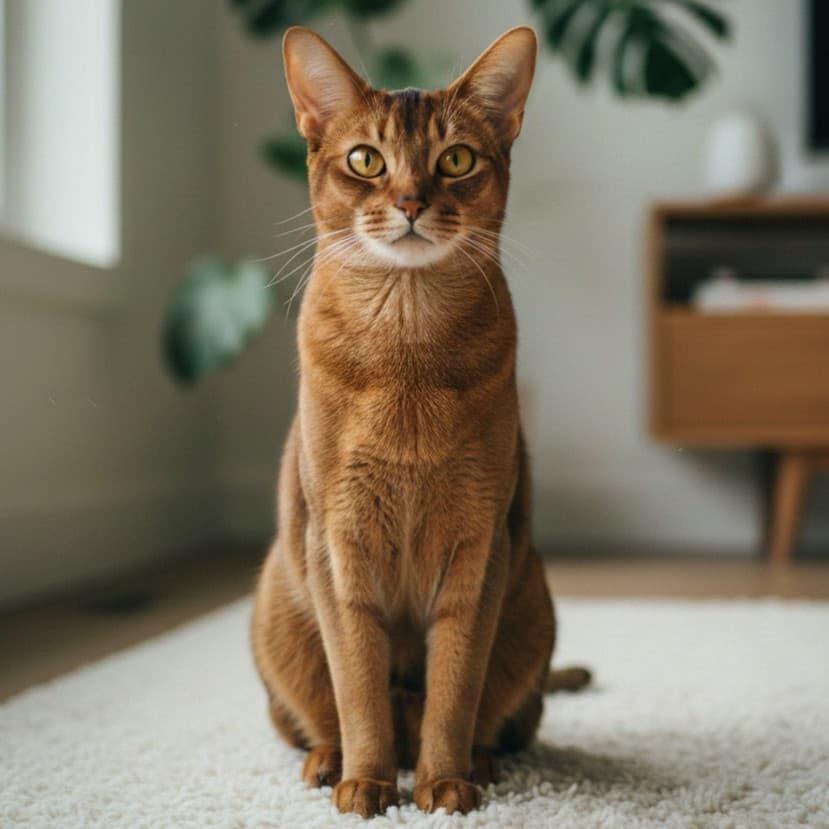
The Abyssinian is one of the oldest known cat breeds, prized for its intelligence, athleticism, and distinctive ticked coat that gives them the appearance of a small wildcat. Often called 'Aby' by enthusiasts, these medium-sized cats are perpetual motion machines who love to climb, explore, and stay involved in everything their humans do. They are not lap cats but are deeply bonded to their families, preferring to show their affection through active participation in daily life rather than quiet cuddling. With their striking wildcat appearance and warm, glowing agouti coat, Abyssinians turn heads wherever they go. Their large, expressive almond-shaped eyes radiate curiosity and intelligence, and their lithe, muscular bodies are built for the acrobatic feats that never cease to entertain their owners. Ranking consistently among the most popular cat breeds worldwide, they are ideal for active households seeking an engaging, interactive feline companion. The Abyssinian delivers boundless energy, unwavering devotion, and a lifetime of entertaining companionship that makes every day an adventure.
Key Stats
Weight
6-12 lbs
Height
8-10"
Lifespan
14-17 yrs
Energy
5/5
Is This Breed Right For You?
Origin & History
The Abyssinian's exact origins are among the most debated in the cat fancy, with theories spanning ancient Egypt, the coast of the Indian Ocean, and Southeast Asia. The breed's name comes from Abyssinia, modern-day Ethiopia, though genetic studies suggest their ancestors may have originated along the coast of the Indian Ocean and parts of Southeast Asia rather than Africa.
Early depictions of cats in ancient Egyptian art bear a striking resemblance to the Abyssinian, with their lithe bodies, large ears, and ticked coats fueling romantic associations with the cats worshipped by pharaohs. While the direct lineage to Egyptian cats remains unproven, the Abyssinian certainly evokes the regal bearing of those ancient felines.
The breed's documented history begins in Great Britain in the late 1800s. A cat named Zula was reportedly brought from Abyssinia to England by soldiers returning from the Abyssinian War in 1868, though this account is debated by historians. British breeders developed the breed through careful selection, refining the distinctive ticked coat pattern and elegant body type.
The Cat Fanciers' Association recognized the Abyssinian in 1906, making it one of the earliest registered breeds in North America. The breed quickly gained admirers for its unique appearance and lively personality, establishing a loyal following among cat fanciers on both sides of the Atlantic.
The breed's popularity grew steadily until World War II, which devastated breeding programs across Europe and nearly eliminated the Abyssinian from the British Isles. At the war's end, fewer than a dozen breeding Abyssinians remained in England. American breeders played a critical role in rebuilding the breed after the war, importing cats from Britain and carefully establishing strong, diverse bloodlines that would ensure the breed's future.
The post-war decades saw the Abyssinian's popularity surge in North America, and the breed has maintained its position as one of the most sought-after pedigreed cats ever since. Today, the Abyssinian consistently ranks among the top ten most popular cat breeds worldwide, celebrated for the same intelligence, athleticism, and striking beauty that has captivated admirers for well over a century.
Traits & Characteristics
Individual cats may vary from breed-typical traits
Family & Social
Personality
Cattitude
Adaptability
Health & Wellness
Key health information for Abyssinian owners
Health Screening
- Hip & Elbow Evaluation
- Cardiac Exam
- Eye Certification
Exercise Needs
- 45+ minutes daily
- Mental stimulation important
- High energy breed
Watch For
- Pyruvate Kinase Deficiency (PK Deficiency)
- Progressive Retinal Atrophy (PRA)
- Amyloidosis
- Luxating Patella
Care Guide
Everything you need to know about caring for a Abyssinian
Grooming
weekly
Exercise
45+ min/day
Training
Very Easy
Health
Generally Good
Training Your Abyssinian
Training Approach
Use positive reinforcement with treats and interactive play as rewards. Keep sessions short and varied. Clicker training works well.
Training Tips
- Start training early while curious and receptive
- Use interactive play as reward
- Teach fetch - many Abys love it naturally
- Consider leash training for outdoor adventures
- Provide puzzle feeders for mental stimulation
Common Challenges
- May become bored with repetitive training
- High energy can make focus difficult
- Easily distracted by interesting surroundings
- May train their owner instead
Is a Abyssinian Right For You?
Great Match If...
- You have children or a family
- You want an easy-to-train cat
- You're active and outdoorsy
- You want a loyal companion
Think Twice If...
- You want a low-energy cat
- You're away from home often
Frequently Asked Questions
Abyssinians make excellent pets for active households that can provide the stimulation they need. They are intelligent, playful, and form strong bonds with their families, offering constant entertainment and loyal companionship throughout their long lives. However, they are not lap cats and need significant daily interaction, exercise, and mental enrichment to stay happy and well-behaved. They do not do well left alone for long periods and may become destructive if bored or lonely. Prospective owners should be prepared for a high-energy, interactive companion that wants to participate in every aspect of your life rather than quietly snooze on the couch. For the right household, they are one of the most rewarding cat breeds available.