Ragdoll
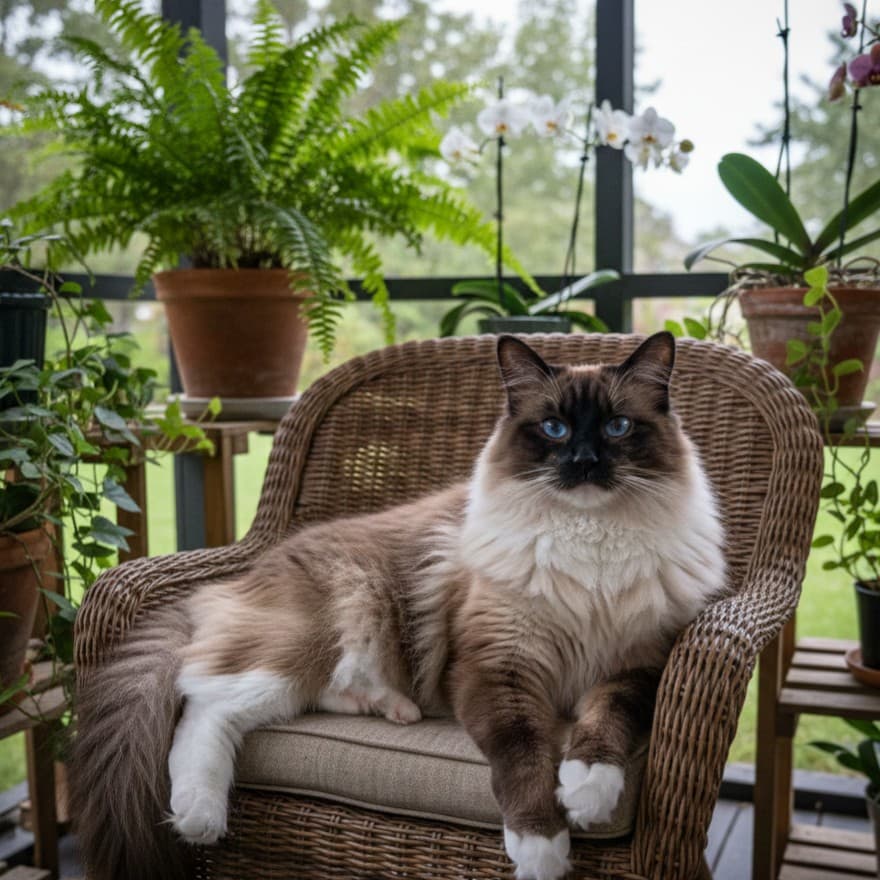
The Ragdoll is a large, gentle, and remarkably docile cat breed known for going limp like a ragdoll when picked up. Developed in California in the 1960s, these blue-eyed beauties are famous for their affectionate, puppy-like personalities and their tendency to follow their owners everywhere. Ragdolls are one of the largest domestic cat breeds, with males reaching up to 20 pounds, yet they maintain a sweet, trusting nature throughout their lives that makes them exceptional family companions.
Key Stats
Weight
10-20 lbs
Height
9-11"
Lifespan
12-17 yrs
Energy
2/5
Is This Breed Right For You?
Origin & History
The Ragdoll breed has a fascinating and somewhat controversial origin story that began in Riverside, California in the early 1960s. Ann Baker, a Persian breeder, developed the breed starting with a white longhaired cat named Josephine, who may have been a feral cat. After Josephine was hit by a car and recovered, Baker noticed that her subsequent kittens displayed an unusual docile temperament and tendency to go limp when picked up.
Baker began selectively breeding Josephine's offspring with other cats, including a Birman-type male and a solid black cat. She focused on developing the distinctive floppy, relaxed temperament that would become the breed's hallmark. Baker was known for making unusual claims about the breed, including theories about genetic alterations, which the scientific community dismissed.
In 1971, Baker trademarked the name Ragdoll and established her own registry, the International Ragdoll Cat Association (IRCA), with strict breeding guidelines. Some breeders eventually broke away from Baker's organization to establish the breed through traditional cat registries. Denny and Laura Dayton were instrumental in gaining mainstream recognition for the breed.
TICA recognized the Ragdoll in 1979, and CFA followed with full championship status in 2000. Today, Ragdolls are among the most popular cat breeds worldwide, beloved for the exact traits Ann Baker worked to develop: their docile temperament, striking blue eyes, and affectionate personalities.
Traits & Characteristics
Individual cats may vary from breed-typical traits
Family & Social
Personality
Cattitude
Adaptability
Health & Wellness
Key health information for Ragdoll owners
Health Screening
- Hip & Elbow Evaluation
- Cardiac Exam
- Eye Certification
Exercise Needs
- 20+ minutes daily
- Mental stimulation important
- Moderate activity
Watch For
- Hypertrophic Cardiomyopathy (HCM)
- Polycystic Kidney Disease (PKD)
- Feline Infectious Peritonitis (FIP)
- Obesity
Care Guide
Everything you need to know about caring for a Ragdoll
Grooming
2x weekly
Exercise
20+ min/day
Training
Very Easy
Health
Generally Good
Training Your Ragdoll
Training Approach
Use positive reinforcement with treats and gentle praise. Ragdolls respond best to calm, patient training sessions. Their food motivation makes clicker training effective.
Training Tips
- Can learn to fetch and retrieve toys
- Respond well to name and voice commands
- Excellent candidates for leash training
- Enjoy puzzle toys and interactive games
- Start socialization early for best results
Common Challenges
- May be too trusting - needs supervised outdoor time
- Can become dependent on routine
- May not respond well to harsh corrections
Is a Ragdoll Right For You?
Great Match If...
- You have children or a family
- You want an easy-to-train cat
- You want a loyal companion
Think Twice If...
- You're away from home often
Frequently Asked Questions
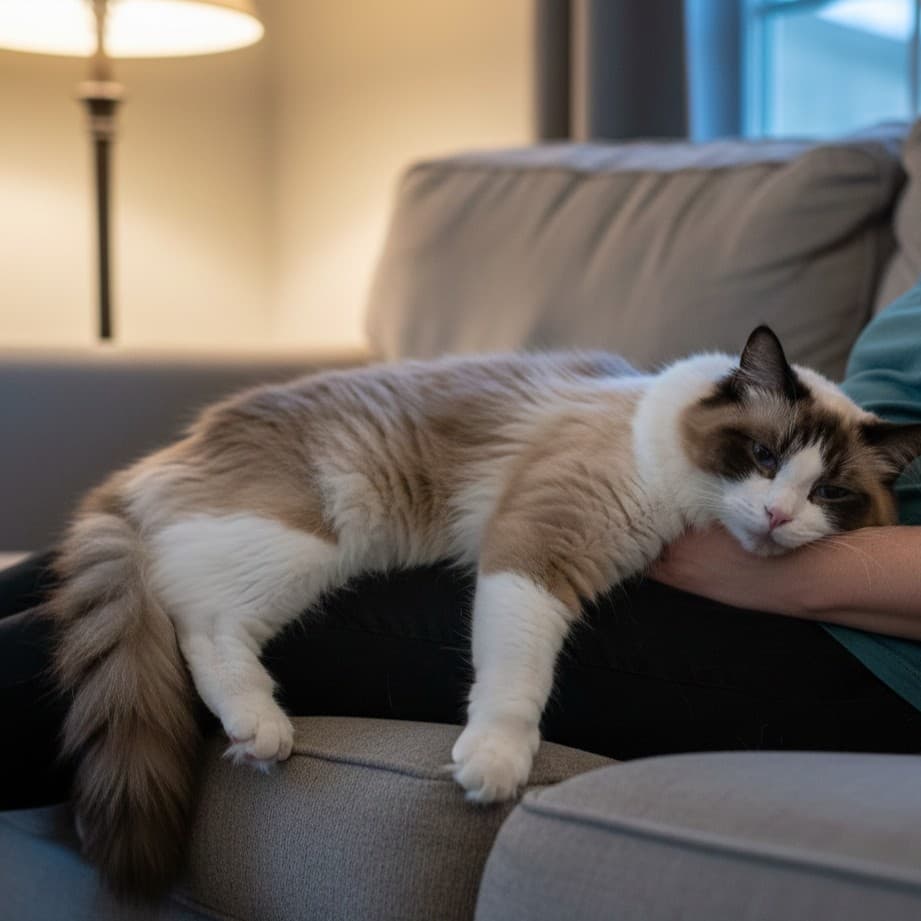
The characteristic limpness that gave Ragdolls their name is a result of their extremely docile and relaxed temperament, which was selectively bred by founder Ann Baker beginning in the 1960s. When picked up, Ragdolls completely relax their muscles and go floppy like a child's ragdoll toy, seeming to melt into your arms.
This unique trait appears to be connected to their overall calm, trusting nature rather than any physical difference. Not all Ragdolls display this behavior equally. Some go completely limp, while others simply become very relaxed when held. The degree of limpness can also depend on the individual cat's mood and comfort level.
This trusting, relaxed nature makes Ragdolls exceptional cuddle companions who genuinely enjoy being held, unlike many cat breeds that merely tolerate it. However, this same trustfulness means they should never be left outdoors unsupervised, as they lack the wariness of strangers and dangers that other cats possess.