Himalayan
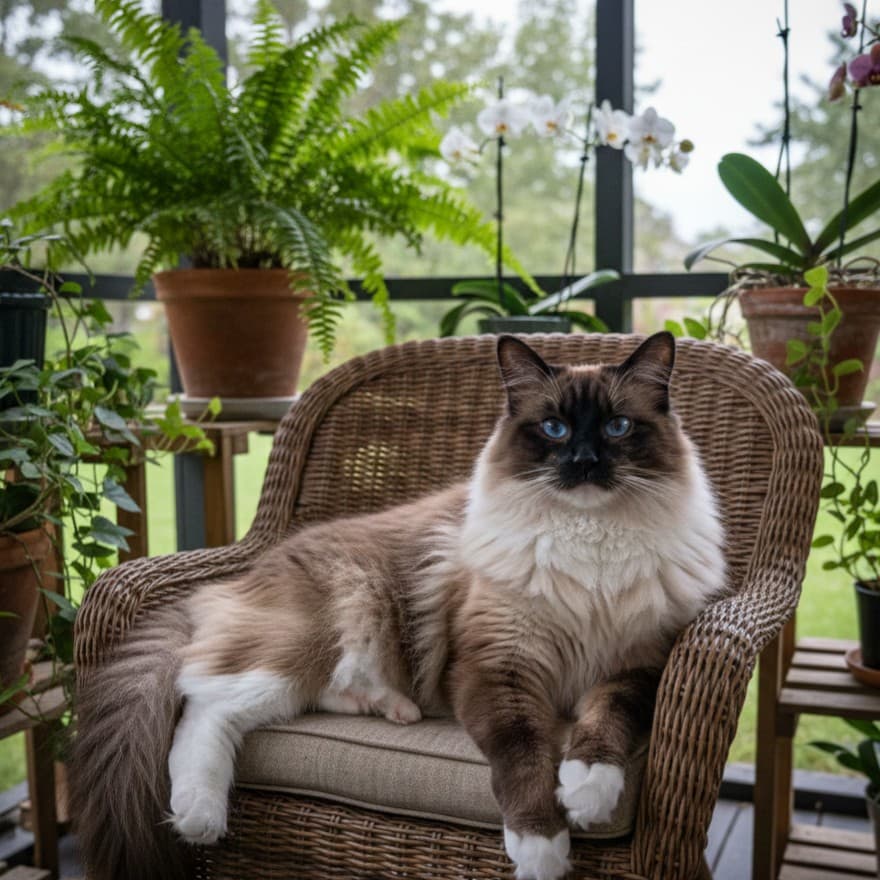
The Himalayan, also called the Colorpoint Persian, combines the luxurious coat and gentle nature of the Persian with the stunning pointed coloring and deep blue eyes of the Siamese. Known for their sweet, docile temperament and breathtaking beauty, Himalayans are devoted companions who prefer calm households and plenty of lap time. These elegant cats have been captivating owners since their development in the mid-twentieth century. Their combination of the Persian's flowing coat and cobby body with the Siamese's striking color points creates a truly stunning cat that is as beautiful to behold as it is gentle to live with. They are the ultimate indoor companion for those who appreciate feline grace and serenity.
Key Stats
Weight
7-14 lbs
Height
9-12"
Lifespan
9-15 yrs
Energy
2/5
Is This Breed Right For You?
Origin & History
The Himalayan was developed through a deliberate breeding program spanning the 1930s through 1950s, crossing Persians with Siamese to create a Persian-type cat with pointed coloring and blue eyes. American breeder Virginia Cobb and Harvard researcher Clyde Keeler began the initial experiments in the 1930s, producing the first pointed longhair kitten named Debutante. Simultaneously in Britain, breeder Brian Sterling-Webb pursued the same goal independently.
CFA recognized the Himalayan as a distinct breed in 1957, acknowledging the years of careful selective breeding required to achieve the Persian body type with Siamese coloring. The breed quickly gained popularity for its striking appearance and gentle temperament. In 1984, CFA controversially reclassified Himalayans as a color division of the Persian breed rather than maintaining them as separate. This decision remains debated among breeders and enthusiasts.
TICA continues to recognize Himalayans as a separate breed, while CFA classifies them as Colorpoint Persians. Regardless of classification, these beautiful cats have earned a devoted following worldwide. Their development represents one of the most successful intentional breed crosses in feline history, combining the best qualities of two beloved breeds into one spectacular package.
Traits & Characteristics
Individual cats may vary from breed-typical traits
Family & Social
Personality
Cattitude
Adaptability
Health & Wellness
Key health information for Himalayan owners
Health Screening
- Hip & Elbow Evaluation
- Cardiac Exam
- Eye Certification
Exercise Needs
- 15+ minutes daily
- Mental stimulation important
- Moderate activity
Watch For
- Polycystic Kidney Disease (PKD)
- Brachycephalic Airway Syndrome
- Hypertrophic Cardiomyopathy (HCM)
- Progressive Retinal Atrophy (PRA)
Care Guide
Everything you need to know about caring for a Himalayan
Grooming
daily
Exercise
15+ min/day
Training
Moderate
Health
Monitor Closely
Training Your Himalayan
Training Approach
Use positive reinforcement with treats and soft praise. Keep sessions short and calm. They respond best to a gentle, consistent approach.
Training Tips
- Can learn to come when called
- Respond well to routine schedules
- Food motivation works well
- Prefer calm training environments
Common Challenges
- May be disinterested in active training
- Prefer lounging to learning tricks
- Can be stubborn if not in the mood
Is a Himalayan Right For You?
Great Match If...
- You have children or a family
- You want a loyal companion
Think Twice If...
- You can't handle lots of fur
- Budget is tight for vet bills
- You're away from home often
Frequently Asked Questions
Himalayans are closely related to Persians but the classification depends on which registry you consult, which can be confusing for prospective owners. CFA considers them a color division of the Persian breed, registering them as Colorpoint Persians within the Persian breed standard. This means at CFA shows, Himalayans compete alongside other Persians. TICA, however, classifies them as a completely separate breed with their own distinct standard and show class.
They share the Persian body type, flat brachycephalic face, cobby build, and flowing double coat but have the Siamese pointed coloring pattern and deep vivid blue eyes that distinguish them immediately. The breeding programs crossed Persians with Siamese cats over several decades beginning in the 1930s to achieve this stunning combination of traits from both parent breeds.
In practical terms, the distinction matters primarily for show purposes and breeding registration. As a pet owner, you can expect a Himalayan to have essentially the same temperament, grooming needs, and health considerations as a Persian, with the added beauty of striking color points and those captivating blue eyes inherited from their Siamese heritage.